ELDER AND VULNERABLE ADULTS MISTREATMENT
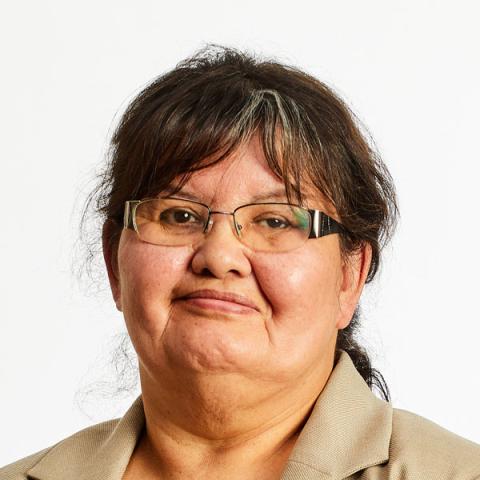
Janie Pepabano from Chisasibi talks about the different types of mistreatment elders and vulnerable adults suffer from and what can be done about it.
Often misunderstood and sometimes hard to recognize, older adults and vulnerable people mistreatment is unfortunately a reality in our communities. The CBHSSJB is committed to promoting healthy aging and to reinforcing respectful relationships between generations for all elders’ wellbeing.
Mistreatment is a single, or repeated act, or lack of appropriate action, that occurs in a relationship where there is an expectation of trust, and that intentionally or unintentionally causes harm or distress to a person.
TYPES OF MISTREATMENT
Gestures, words or attitudes that negatively affect an individual’s psychological well-being or integrity.
|
SIGNS |
CONSEQUENCES |
|
|
Examples
- A relative intimidates a vulnerable adult, tries to control them using manipulation and bullying.
- The elder is isolated, alienated and stranded in their home.
Fraudulent, illegal, unauthorized or dishonest acquisition or use of the older person's property or legal documents; lack of information or misinformation regarding financial or legal matters.
|
SIGNS |
CONSEQUENCES |
|
|
Inappropriate gestures or actions, or absence of appropriate actions, which harm physical well-being or integrity.
|
SIGNS |
CONSEQUENCES |
|
|
Any infringement of individual and social rights and freedoms.
|
SIGNS |
EXAMPLES |
|
|
Non-consensual gestures, actions, words or attitudes with a sexual connotation, which are harmful to the person's sexual well-being, integrity or identity.
|
SIGNS |
EXAMPLES |
|
|
Examples
- A relative tries to forcefully kiss or get physically close to an elder.
- A relative laughs while pointing to an elder's body parts.
- An elder is made to change in front of family members or others.
Any harmful situation created or tolerated by private, public or community institutions providing all types of care and services, which compromise older persons' ability to exercise their rights and freedoms.
|
SIGNS |
EXAMPLES |
|
|
Discrimination based on age, resulting in hostile or negative attitudes, harmful actions or social exclusion.
|
SIGNS |
|
|
1. OPEN THE DISCUSSION WITH THE PERSON
If someone you care about is being mistreated… See it, Name it, Check it.
See it.
"Something is not right."
- Learn to recognize signs of abuse
- Trust your instincts
Name it.
"I'm worried about you."
- Reach out when it's safe
- Avoid finger-pointing or blame
Check it.
"What can I do to help?"
- Make sure they are safe
- Be a good listener
- Connect them to services, like the Wichihiwaauwin Helpline
Listen to the person, without judgment. Offer to accompany her to seek help, if she wants. Remain understanding and present.
2. CONTACT WICHIIHIWAUWIN HELPLINE
The service is confidential, free and accessible in French and English throughout the province. It is available to a varied clientele, including the general public and professionals dedicated to countering mistreatment of older adults.
- Coordinates: 1-833-632-4357 (24/7 helpline)
- Website: CreeHealth.org/
- Emergency Service available 24/7. Cree speakers and Elders are available upon request
- 1-833-632-4357
Contact the helpline yourself, to receive support and guidance. You can also refer the victim to the helpline. Reassure her about the confidentiality of the call. The helpline workers can support all community members regarding their mental health or any psychosocial and psychological concerns, including mistreatment. They all received a proper training related to intervention in mistreatment situations.
3. DISCUSS WITH YOUR LOCAL SOCIAL SERVICES
All community members are invited to go to the clinic to ask for support from the social services team. A community worker or social worker will be assigned to the person and will offer support and guidance with the mistreatment situation. The worker will take the time to assess the situation, describe the services that can be offered and discuss with the person about their expectations. Interventions will be done in respect to the client’s wishes.
In certain circumstances (people considered inapt to take decision by themselves, people living in CBHSSJB Elder’s home, or imminent danger for the person), the CBHSSJB worker will be subjected to mandatory report to the Commissioner of complaints, in order to ensure the person’s safety.
4. COMMISSIONER OF COMPLAINTS
To report the mistreatment of an elder or vulnerable adult who receives services from the CBHSSJB, in its facilities or through in-home care, contact the Commissioner of Complaints.
Commissioner of complaints
r18.complaints@ssss.gouv.qc.ca
5. POLICE SERVICES
911 is the emergency telephone number for North America. It is used for urgent situations that require immediate response from police, fire department, or emergency medical services.
Call 911 for emergencies such as:
- A crime in progress (e.g., assault, theft, domestic violence).
- A life-threatening situation (e.g., serious injury, medical emergency).
- A fire.
- Any situation where immediate danger to life or property is present.
Be prepared to provide:
- Your location (address, cross-streets, landmarks).
- The nature of the emergency.
- A description of any persons involved.
- Your phone number.
Do not call 911 for:
- Non-emergency inquiries.
- Information requests.
- Situations that can be handled by non-emergency police lines or other community resources.
What is an Elder wellness care approach?
Wellness care is an approach that values respect for all individuals, their needs, demands and choices, including refusals. It is expressed through attentions and attitudes, know-how and collaborative skills, respectful of people's values, culture, beliefs, life course and rights and freedoms. It is exercised by individuals, organizations or communities who, through their actions, place people's well-being at the heart of their concerns. It is built through interaction and a continuous search for ways to adapt to others and their environment.
- (PAM 2022-2027, p. 26).
Documentation
Regional initiatives
-
Regional community tour
-
The advisor Elder wellness, in collaboration with Commissioner of complaint, are offering trainings on Elder mistreatment to all frontline workers, working closely with elderly clientele (CBHSSJB social workers, community workers, nurses, physicians, beneficiary attendants, PCCR, housekeepers, MSDC staff, etc. as well as police officers from EEPF). An Escape game named ‘’Jane’s Journey’’ has been developed in partnership with Concordia University and key people in Chisasibi to open the discussion on Elder mistreatment. This activity is followed by information related to report and intervention.
-
Workshops to community members are planned for 2026, once frontline workers are fully equipped to support the population.
-
-
Comic strip on Elder wellness
-
In collaboration with Nunavik, MSSS and internal partners, this comic strip has been developed to open the discussion with youth about Elder wellness. This tool can be used at school, at the Youth Center or any other area to promote respect between generations.
-
-
SAPA community worker
-
To support elders and vulnerable people living in Elders’ Homes outside of Eeyou Istchee, a community worker position has been created in Montreal. This worker visits the clients regularly, offers emotional support in Cree, supports the resources with translation, brings traditional food when possible and answers clients’ needs. Some activities are also organized at the Hotel Espresso to invite Elders’ homes residents to socialize with other community members.
-
-
Cultural safety in Long term care resources outside Eeyou Istchee
-
Pictures of the land and cultural ceremonies have been hung on the walls of a private Elders’ home in Montreal where the CBHSSJB rents a room for respite.
-
In partnership with the CHSLD Boreal in Chibougamau, a project of translation through an Ipad application has been developed. Clients living in this French environment can benefit from this platform where the audio of key words and sentences is in Cree to facilitate communication with the CHSLD staff. For more information, please reach out to Sarah Quint at squint@ssss.gouv.qc.ca
-
In the news
To Promote Elders and Vulnerable Adults' Wellbeing, please join us in highlighting World Elder Abuse Awareness Day. Wear purple colors Check out the schedule by community below: